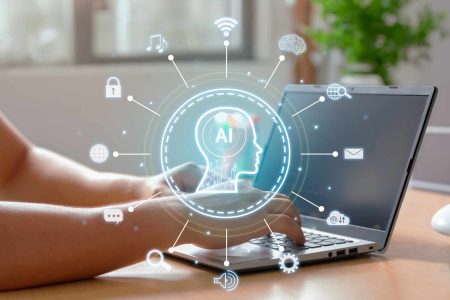
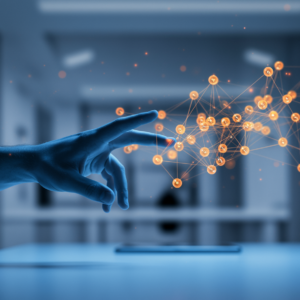
Welcome to the forefront of digital marketing, where the integration of artificial intelligence is no longer a futuristic concept but a present-day necessity for staying competitive. We’re witnessing a fundamental shift in how we connect with audiences, driven by the power of AI to not just understand but anticipate customer needs. This revolutionary technology is transforming everything from crafting compelling content that resonates deeply to tailoring individual customer journeys with unprecedented precision. Furthermore, AI is proving invaluable in refining advertising efforts for maximum impact, enhancing our visibility through smarter SEO strategies, and unlocking powerful insights through predictive analytics. Beyond these strategic advantages, AI is streamlining our workflows by automating routine marketing tasks, freeing up valuable time for more creative and strategic endeavors. While embracing AI in marketing does come with its own set of hurdles, the benefits for boosting your digital marketing performance are undeniable, offering a path to smarter, more effective campaigns.
The AI Revolution in Digital Marketing
Remember the days of purely manual keyword research, painstakingly crafting email sequences by hand, and relying on intuition for ad targeting? Those times are rapidly becoming relics of the past. The “AI Revolution” in digital marketing isn’t just a buzzword; it signifies a fundamental pivot in how we approach our work. We’re moving away from labor-intensive, often guesswork-driven methods and embracing a future where intelligent algorithms augment our abilities. This shift means faster analysis of vast datasets, more accurate predictions of consumer behaviour, and the capacity to execute complex campaigns with a level of efficiency previously unimaginable. It’s about leveraging machine power to free up human creativity and strategic thinking.
One of the most impactful aspects of the AI revolution is the sheer speed and scale it brings to digital marketing. Manual processes, no matter how efficient, simply cannot compete with the ability of AI to analyse millions of data points in seconds, identify subtle trends, and execute personalised actions at scale. Consider the difference between segmenting an email list manually versus having AI dynamically adjust content and timing based on individual user behaviour in real-time. This exponential increase in speed and scale allows marketers to move faster, reach wider audiences with tailored messages, and react to market changes with unprecedented agility. It’s about doing more, faster, and with greater precision.
In today’s hyper-competitive digital landscape, embracing AI isn’t just an option; it’s increasingly becoming a necessity for survival and growth. Businesses that fail to integrate AI into their marketing strategies risk being left behind by competitors who are leveraging its power to gain a significant edge. From delivering hyper-personalised experiences that build stronger customer loyalty to optimising ad spend with surgical precision for higher ROI, AI-powered marketing is setting a new standard. The “revolution” isn’t just about adopting new tools; it’s about fundamentally rethinking our approach to marketing to stay relevant and thrive in a data-driven world.
Understanding AI’s Core Role
At its heart, artificial intelligence in digital marketing isn’t about replacing human creativity or strategic thinking; it’s about augmenting and accelerating our capabilities. Think of AI as a powerful analytical engine and automation tool. Its core role is to process vast amounts of data – far more than any human could in a reasonable timeframe – and identify patterns, trends, and correlations that inform better decision-making. This includes understanding customer behaviour, predicting future actions, optimising resource allocation, and automating repetitive tasks, freeing up marketers to focus on higher-level strategy and creative endeavors.
Specifically, AI’s fundamental function in this domain revolves around three key pillars: learning, reasoning, and self-correction. AI algorithms learn from historical data, continuously improving their predictions and recommendations over time. They can then reason based on this learned information to make intelligent decisions, such as which ad creative is most likely to resonate with a specific audience or which content topic will perform best. Furthermore, many AI systems possess the ability to self-correct, adjusting their models and strategies based on real-time performance data, ensuring continuous optimisation and adaptability in the ever-changing digital landscape.
Ultimately, understanding AI’s core role means recognising its capacity to move beyond simple automation to provide actionable insights and predictive power. It allows marketers to shift from reactive strategies based on past performance to proactive ones driven by data-informed foresight. By leveraging AI to understand the nuances of customer interactions, segment audiences with greater precision, and predict future trends, digital marketers can build more effective campaigns, deliver more relevant experiences, and achieve a higher return on investment, fundamentally changing how we approach and execute marketing initiatives.
AI-Powered Content Creation
One of the most immediate and impactful applications of AI in digital marketing is its ability to generate written content. Leveraging sophisticated language models, AI tools can now produce everything from website copy and social media posts to email subject lines and even blog article drafts. This isn’t about replacing human creativity entirely, but rather augmenting it. Imagine the time saved and the sheer volume of content that can be produced, allowing marketing teams to focus on strategy, refinement, and ensuring brand voice consistency. AI can analyse vast datasets to understand what resonates with specific target audiences, leading to copy that is not only grammatically sound but also highly engaging and persuasive, tailored for maximum impact across various platforms.
AI’s capabilities extend beyond text creation. Artificial intelligence is now revolutionizing how we approach visual and multimedia content. Tools powered by AI can generate unique images based on text prompts, create short video clips with dynamic effects, and even assist in editing existing multimedia content more efficiently. This opens up a world of possibilities for marketers looking to create visually appealing campaigns without needing extensive graphic design or video editing expertise for every task. Furthermore, AI can analyse performance data to predict which visual elements are most likely to capture attention and drive conversions, allowing for more data-driven creative decisions and a more impactful overall content strategy.
Moving beyond generic content, AI enables a level of personalisation previously unimaginable. By analysing user behaviour, preferences, and historical data, AI can dynamically tailor content experiences for individual visitors or segments of your audience. This could involve recommending specific blog posts based on past reading habits, showing personalised product suggestions on an e-commerce site, or customising email content to address specific interests. This level of personalised content delivery significantly increases engagement, builds stronger customer relationships, and ultimately leads to higher conversion rates. It shifts the focus from broadcasting a single message to delivering relevant, timely, and highly specific content that resonates deeply with each individual.
Personalising Customer Experiences with AI
One of the most profound impacts AI is having on digital marketing is its ability to enable truly personalised customer experiences at scale. Gone are the days of generic email blasts and one-size-fits-all website content. AI algorithms can analyse vast amounts of customer data – browsing history, purchase behaviour, demographic information, even social media interactions – to build incredibly detailed individual profiles. This allows marketers to understand not just *who* their customers are, but *what* they want, *when* they want it, and *how* they prefer to interact, paving the way for highly relevant and engaging touchpoints throughout the customer journey.
This deep understanding fuels hyper-segmentation, moving beyond broad categories to create micro-segments or even individual customer segments. AI-powered platforms can dynamically adjust website content, product recommendations, and even pricing in real-time based on a user’s current behaviour and predicted preferences. Imagine a returning customer seeing personalised product bundles on your homepage based on their past purchases, or a first-time visitor being shown introductory offers relevant to their search query. This level of tailored interaction makes customers feel seen and understood, significantly increasing engagement, conversion rates, and ultimately, customer loyalty.
Beyond website personalisation, AI extends its reach to email marketing, social media advertising, and even chatbots. AI can determine the optimal time to send an email to an individual, the most effective subject line to grab their attention, and even the specific product recommendations to include within the email body. On social media, AI helps target ads to the precise individuals most likely to be interested in your offering, based on their interests and online behaviour. Furthermore, AI-powered chatbots provide instant, personalised support, answering questions and guiding customers through the purchase process, further enhancing the overall customer experience and building stronger relationships.
Optimising Advertising Campaigns with AI
Gone are the days of spray-and-pray advertising. AI empowers marketers to move beyond basic demographic targeting and delve into hyper-precise audience segmentation. By analysing vast datasets of user behaviour, purchase history, online interactions, and even sentiment, AI algorithms can identify high-value customer segments with incredible accuracy. This allows for the creation of highly personalised ad campaigns that resonate deeply with specific groups, leading to significantly higher engagement rates and conversion rates. Imagine showing ads for hiking gear specifically to individuals who frequently research hiking trails online, or promoting a new restaurant to users who regularly search for local dining options. This level of intelligent targeting ensures your advertising budget is spent effectively, reaching the right people at the right time with the right message.
Creating compelling ad creatives is crucial, but knowing which versions perform best can be a manual and time-consuming process. AI revolutionizes this by enabling dynamic ad creative optimisation. AI platforms can automatically test multiple variations of ad copy, headlines, images, and calls to action in real-time. By analysing performance metrics like click-through rates, conversion rates, and engagement, the AI quickly identifies the most effective combinations and automatically prioritizes displaying the winning creatives. This continuous learning and optimisation process ensures your ads are always evolving to maximise their impact, leading to improved ROI and reduced wasted ad spend. It’s like having a dedicated team constantly split-testing your ads for peak performance.
Forecasting advertising campaign performance can be a challenge, but AI brings a new level of predictability to the table. By analysing historical campaign data, market trends, competitor activity, and external factors, AI models can predict the likely outcome of different campaign scenarios. This allows marketers to make more informed decisions about budget allocation, channel selection, and targeting strategies. Furthermore, AI can automatically adjust bids and budgets in real-time based on predicted performance, ensuring your campaigns are always optimised for maximum reach and conversion within your budget constraints. This proactive approach minimises risk and maximises the efficiency of your advertising spend, giving you a competitive edge in the crowded digital landscape.
AI for SEO Strategies
Forget keyword stuffing and guesswork; AI is fundamentally reshaping how we approach Search Engine Optimisation (SEO). Instead of relying on manual analysis and reactive adjustments, AI tools can delve into massive datasets of search trends, competitor strategies, and user behaviour to identify high-impact keywords and content gaps with remarkable accuracy. This allows us to move beyond simple keyword research and focus on creating truly valuable, relevant content that not only ranks well but genuinely answers user queries, a crucial factor for modern search engine algorithms.
Beyond keyword identification, AI is proving invaluable in technical SEO. Think about analysing website structure, identifying broken links, optimising image alt text, and even pinpointing opportunities for schema markup – tasks that were once tedious and time-consuming. AI-powered tools can automate these audits, providing actionable insights and even suggesting code improvements to enhance crawlability and indexability. This frees up valuable time for marketers to focus on strategic initiatives rather than getting bogged down in technical details, ensuring our websites are not just visible, but truly optimised for search.
Perhaps one of the most exciting applications of AI in SEO is in content optimisation and personalisation for search intent. AI can analyse existing content, suggest improvements for readability and relevance, and even help generate variations tailored to different search queries or user segments. Furthermore, AI can predict which types of content are likely to perform best for specific keywords and target audiences, allowing us to prioritize our content creation efforts and build a more effective, data-driven SEO strategy that drives organic traffic and delivers measurable results.
Predictive Analytics and Customer Insights
Gone are the days of relying solely on historical data to guess what your customers might do next. AI-powered predictive analytics allows marketers to anticipate future customer actions with remarkable accuracy. By analysing vast datasets – including past purchases, website interactions, social media engagement, and even demographic information – AI algorithms can identify patterns and predict which customers are most likely to make a purchase, churn, or respond to a specific marketing campaign. This foresight is invaluable, enabling you to proactively target high-potential leads, re-engage at-risk customers before they leave, and allocate your resources where they’ll have the biggest impact. It’s about moving from reactive marketing to a truly proactive and informed approach.
Beyond predicting future actions, AI helps us gain a much deeper and more nuanced understanding of our customers as individuals. Predictive analytics can segment your audience not just by basic demographics, but by their predicted value, their likelihood to engage with certain content types, or their preferred communication channels. This level of insight allows for hyper-segmentation and the creation of truly personalised marketing messages that resonate on a deeper level. Imagine understanding not just *who* your customers are, but *why* they behave a certain way online and what truly motivates their purchasing decisions. AI unlocks these hidden insights, transforming raw data into actionable knowledge that drives more effective strategies.
The insights gleaned from predictive analytics aren’t just interesting; they are a powerful engine for driving your overall digital marketing strategy. By understanding which campaigns are likely to perform best with specific customer segments, you can optimise your budget allocation and refine your targeting. Identifying potential churn risks allows you to implement retention strategies before it’s too late. Predicting future demand helps with inventory management and promotional planning. Essentially, AI-powered predictive analytics transforms your marketing efforts from educated guesswork into a data-driven science, leading to higher ROI, improved customer satisfaction, and a significant competitive advantage in the digital landscape.
Automating Marketing Tasks with AI
One of the most immediate and tangible benefits of AI in digital marketing is its ability to automate repetitive and time-consuming tasks. Think about the endless hours spent on manual data entry, scheduling social media posts across multiple platforms, or segmenting email lists based on intricate criteria. AI-powered tools can now handle these chores with speed and accuracy, freeing up valuable human resources to focus on more strategic activities like creative brainstorming, campaign planning, and building deeper customer relationships. This automation isn’t just about efficiency; it’s about allowing your team to operate at a higher level, tackling the complex challenges that truly drive growth.
Beyond the basic scheduling and data management, AI-driven automation extends to more sophisticated processes. Consider the automation of customer service interactions through chatbots and virtual assistants. These AI tools can handle a significant volume of common inquiries, provide instant support, and even guide customers through troubleshooting steps, all without human intervention. This not only improves response times and customer satisfaction but also reduces the workload on your support team, allowing them to address more complex issues. Similarly, AI can automate the distribution of personalised content based on user behaviour, ensuring that the right message reaches the right person at the right time, automatically.
The power of AI in automating marketing tasks also lies in its ability to learn and adapt. Unlike simple rule-based automation, AI systems can analyse vast amounts of data to identify patterns and optimise workflows autonomously. For example, an AI-powered email marketing platform can automatically A/B test subject lines, send times, and content variations, continuously refining its approach based on performance data to maximise open rates and click-through rates. This constant learning and adaptation mean that your automated processes aren’t static; they are constantly improving, delivering better results over time without requiring manual adjustments.



Overcoming AI Challenges in Marketing
One of the most significant hurdles when implementing AI in digital marketing is ensuring robust data privacy and security. AI models are hungry for data, and collecting, storing, and processing vast amounts of customer information raises serious concerns about compliance with regulations like GDPR or CCPA. Marketers need to prioritize building secure data infrastructures and implementing strong data governance policies. This involves anonymizing or pseudonymizing data where possible, obtaining explicit consent for data usage, and regularly auditing systems for vulnerabilities. Transparency with customers about how their data is being used by AI is also crucial for building trust and mitigating potential backlash. Ignoring these issues can lead to hefty fines, reputational damage, and a loss of customer confidence.
Another challenge lies in the inherent complexity of some AI algorithms, often referred to as the “black box” problem. It can be difficult for marketers to understand exactly how AI makes certain decisions, such as why a specific ad was shown to a particular user or why a piece of content was recommended. This lack of explainability can hinder our ability to refine strategies, troubleshoot issues, and build confidence in the AI’s outputs. Overcoming this requires focusing on explainable AI (XAI) techniques where possible, working closely with data scientists to gain insights into model behaviour, and establishing clear metrics to evaluate AI performance. While perfect transparency may not always be achievable, striving for greater understanding is vital for effective AI adoption.
Successfully integrating AI tools and platforms with existing marketing technology stacks can be a complex undertaking. Legacy systems may not be designed to seamlessly communicate with AI, leading to data silos and workflow inefficiencies. Furthermore, the rapid evolution of AI technology creates a skills gap within marketing teams. Marketers need to develop new competencies in areas like data analysis, AI ethics, and understanding AI-driven insights. Addressing this requires a strategic approach to technology integration, potentially involving migrating to more modern platforms or utilizing middleware. Investing in training and upskilling marketing teams is also paramount, fostering a culture of continuous learning to keep pace with the evolving AI landscape and maximise the potential of these powerful tools.


Key Takeaways for Boosting Your Digital Marketing with AI
As we’ve explored, the AI revolution is here, and it’s fundamentally changing the landscape of digital marketing. From boosting B2B marketing and streamlining small business operations to enhancing customer experiences and optimising ad spend, AI is proving to be an indispensable tool. By embracing AI-powered content creation, personalising interactions, and leveraging predictive analytics, you can unlock new levels of efficiency and effectiveness in your marketing efforts.
Ultimately, integrating AI into your digital marketing strategy isn’t just a trend – it’s becoming a necessity for staying competitive. Whether you’re looking to boost sales in ecommerce or simply automate repetitive tasks, understanding and implementing AI is key to driving growth and achieving your marketing goals in the digital age. Start small, explore the possibilities, and watch your digital marketing soar.